Back in June I sat down with John Boyne to talk about his latest novel, The Absolutist, why he chose to set it in Norwich, and why the first world war continues to draw writers and readers to it.

Showing posts with label Author interview. Show all posts
Showing posts with label Author interview. Show all posts
Wednesday, 31 August 2011


Tuesday, 5 July 2011
In Conversation with: Simon Armitage
Earlier this year I had a quick chat with Simon Armitage about his latest collection, Seeing Stars, as part of the Summer Reads programme I work on at Writers' Centre Norwich.
Thursday, 3 June 2010
Author Interview: In Conversation with Chloe Hooper

Sam Ruddock: First up, can you tell us a bit about The Tall Man?
Chloe Hooper: One morning, in the Far-north Queensland Aboriginal community of Palm Island, a local man called Cameron Doomadgee was arrested for swearing at a white policeman, and forty minutes later lay dead in the island’s police station with injuries of the kind sustained in a car or plane crash. The officer, Senior Sergeant Christopher Hurley, claimed his prisoner had tripped over a step. The Tall Man tells the story of Palm Island, of the enigmatic Hurley– and of the struggle to bring him to trial.
SR: What was your inspiration for writing The Tall Man? Was there a moment when the need to write it struck you?
CH: From the first day I arrived on the island I knew the dimensions of this case would only fit a book: the collision between Hurley and Doomadgee told a much bigger tale about Aboriginal history, religion, cosmology; the destructive forces of white settlement; and the state of racial reconciliation in early twenty-first century Australia. Right from the start the story was under my skin, and I wanted to know what had really happened between those two men in the Palm Island police station.
SR: Your first novel, A Child’s Book of True Crime, was a convincing fiction of hatred and death. But it was still fiction. In The Tall Man that hatred and death becomes chillingly real. What, to you, were the big differences between writing the two books? Is there a clear distinction between fiction and non-fiction or do they blend into each other?
CH: My first novel was a parody of a true-crime book, so I couldn’t miss the irony when I found myself writing a real one. In non-fiction, it’s useful to think as a novelist might about the best ways to confront and arrange material, but you have to paint within the borders of fact. That is not to say necessarily that those boundaries limit the writer’s canvas—on the contrary, what I saw on Palm Island, and what happened in this case, was often beyond the reach of my imagination.
SR: Most islands off the Queensland coast host tourists visiting the Barrier Reef. Palm Island is different. Formally an Aboriginal reserve it is today the home to around 2,500 inhabitants, 90 per cent of whom are unemployed. Alcoholism and violence are common. Could you say something of the factors that have led to such cataclysmic social breakdown?
CH: Palm is a stunningly beautiful tropical island—a tourist brochure paradise like the others, but with a hellish history it can’t escape. In the 1920s it was settled as an open air jail for Aboriginal people from over forty different tribes around Queensland. (By the early twentieth century all “full blood” Aborigines and “half- caste” women and children were required by law to live on one of the mostly mission-run settlements throughout the state, under government control.) If an Aborigine ‘misbehaved’ on a regular reserve— for instance, he asked about his wages, or was caught speaking a traditional language—he was sent, often in leg irons, to Palm Island, or Punishment Island as it was known. In its isolation the settlement became increasingly authoritarian: a kind of tropical gulag. Even in the early 1970s it was still completely segregated. After decades of failed government policy, it’s now a place with terrible health, life-expectancy, education, and economic prospects.
SR: For research you spent a long time living amongst Aboriginal women. What experiences and impressions have you retained from that time?
CH: I didn’t actually spend a long time living amongst Aboriginal women, but when I did travel to Palm Island or other Indigenous communities, I formed strong relationships with many women, including Cameron Doomadgee’s sister, Elizabeth. There’s a scene in The Tall Man where I go to a prayer meeting with Elizabeth and hear a group of older women singing Amazing Grace: I’ve certainly retained a sense of how graceful people can be in the midst of grief, or rage, or ongoing hardship.

CH: When I first started researching this case, Hurley struck me as almost a cartoon “Deep North” copper. His story of tripping through the doorway sounded straight out of Jim Crow Alabama, but slowly I realised he was far more complicated. As a young officer, Hurley had been posted to the Indigenous community of Thursday Island, in the Torres Strait, where, according to the Aboriginal activist Murrandoo Yanner, who was later his friend, Hurley realised he was a racist and decided to change his ways. He set up a sports club for local kids. And he continued serving in remote Aboriginal communities, along the way doing more volunteer work. I travelled to some of the places Hurley worked, around Cape York and the Gulf Country, and I spoke to many people who genuinely adored him; old people who found him respectful; kids who he’d taken camping and given driving lessons in the police van. My question then became how had a young, idealistic cop transformed from his brother’s keeper into his brother’s killer?
SR: And what of the victim, Cameron Doomadgee?
CH: Cameron Doomadgee was born with a terrible legacy: his grandparents were survivors of frontier violence in far-north Queensland; his parents were the survivors of Australia’s Stolen Generation. Cameron was by all accounts a peaceful, “happy-go-lucky” man who loved his family and never looked for a fight–but he was also an alcoholic. He and Hurley were the same age the morning they met: thirty-six. The terrible statistical truth is that Cameron had another decade to live according to the odds whereas Hurley had half his life ahead of him.
SR: How difficult and how important is it for an author to remain neutral in a case that excites such passions as this?
CH: In non-fiction, it’s important for the reader to feel they can trust the authorial voice—if they smell ideology or a political agenda the trust is blown.
SR: This case, like that of OJ Simpson in the US, seems to have grown to embody all of the hurt and guilt and prejudice at the heart of relations between native and white Australia. Is that a fair statement, and could you say a little about what has happened since the book was published?
CH: Perhaps less like Simpson than Rodney King…but I’ve often thought the Palm Island case takes Australians back to the nation’s original sin: a white man killing a black man; to a moment, as you say, full of hurt and guilt and prejudice. Certainly, the legal fight between Hurley and the Palm Island community is one neither side can give up. In 2006, a coroner found Hurley had fatally assaulted Cameron Doomadgee, but the following year he was acquitted of manslaughter. Most recently, Hurley has applied to have the coroner’s findings against him overturned. As a result, the inquest into the death in custody has been reopened. At the time of writing, a new coroner has just reheard the evidence as to what happened the morning of Doomadgee’s death, and we are waiting to see what findings he delivers.
SR: In February 2008, Australian Prime Minister Kevin Rudd issued an apology to the Aboriginal population for the Stolen Generations and “laws and policies of successive Parliaments and governments that have inflicted profound grief, suffering and loss on these our fellow Australians.” What do you think this apology meant to Australians? What do you think the future holds for the Aboriginal population?
CH: I think the apology was a very important moment for Australians—full of hope and marking a national shift in consciousness. Unfortunately, however, the economic and social gap between Indigenous and non-Indigenous Australians is as wide as ever.
SR: The last line of the book is: “I had wanted to know more about my country and now I did – now I knew more than I wanted to.” Do you still feel the same in retrospect and which elements of knowledge made you feel so strongly at the time?
CH: I hadn’t truly understood the depth of racism in Australia – now and in the past – and how it corrupts everything it touches. I don’t regret having a keener awareness of this, although it can still viscerally shock me.
SR: Have you always wanted to be a writer?
CH: This does seem to have been a delusion that’s stuck…
SR: Do you have a specific place in which you write?
CH: I usually work in my study at home.
SR: How do you structure your day as a writer?
CH: I try to get to work soon after getting up. (I’ve read somewhere that Alice Munro won’t even talk to her husband in the morning before going to the desk!) Then the battle against procrastination begins…
SR: What do you write on/with?
CH: I tend to make a lot of notes, put them on the computer and then do most of the serious work on my printed drafts.
SR: You seem to choose to write about difficult topics. How do you separate work from your personal life?
CH: You can’t separate completely, but writing this book was a very rich experience. There was also a lot of poetry and beauty in the story—which I hope in some way I capture.
SR: Are there any other ‘True Crime’ books you would urge us to read?
CH: I count Janet Malcolm’s The Journalist and the Murderer as a sort of meta-true crime book, about crime and the ethics and psychology of crime-reporting, which I would recommend to anyone.
SR: What do you think the appeal of True Crime books is? Is it the reportage aspect, or something murkier?
CH: Probably something murkier…I think people find true crime fascinating in part because it reveals the limits of human behaviour. There can also be a Hitchcockian element to the stories – a sort of “it could happen to you” element: people wake up, like Hurley probably did that morning, and think the day will be just like any other to find, however, that their lives will slip off their carefully laid tracks and they’ll be out of control.
SR: Which writers do you admire?
CH: Alice Munro, JM Coetzee, Charlotte Bronte…
SR: Are there any up and coming writers you are particularly excited about?
CH: It’s terrible, but I tend to read writers who are more established, partly to see if they have any tricks I can steal!
SR: What are your five favourite books?
CH: The Journalist and the Murderer, Janet Malcolm; Disgrace, JM Coetzee; As I Lay Dying, William Faulkner; Jane Eyre, Charlotte Bronte; The Executioner’s Song, Norman Mailer
SR: Finally, are there any questions we should have asked but didn’t? Is there anything more you would like to say but haven’t had a chance to?
CH: I don’t think so, but thank you for asking.
SR: Chloe Hooper, thanks for giving us this fascinating insight into The Tall Man.
 This interview was conducted by Sam on behalf of Writers’ Centre Norwich as part of the Summer Reads programme launching in June. For more information, please see www.summerreads.org.uk
Thursday, 20 May 2010
Author Interview: In Conversation With Simmone Howell
In the third of my interviews this summer I've chatted summer camp, chocolate and movies with Australian author Simmone Howell.
 SR: First up, can you tell us a bit about Everything Beautiful?
SH: Everything Beautiful is about Riley Rose, a sixteen-year-old plus-size drama queen who is sentenced to a Christian holiday camp for bad-behaviour. Riley is atheist with a chip on her shoulder. She is appalled by the happy campers and sets out to escape in a dune buggy across the Little Desert. It’s a comedy drama romance.
SR: What inspired you to write it?
SH: I think I always had a Christian camp story in me. I went to several holiday camps as a teenager and I don’t remember any of the parables, I only remember mean girls with whopping great cans of hairspray. I wanted to write about a teenager who doesn’t really think she’s looking for answers but ends up asking lots of questions.
SR: Riley is a colourful character. Her language is full of expletives, she openly drinks and talks about sex. Some reviewers have questioned whether this is appropriate in a Young Adult novel. What do you say to this?
SH: My favourite back-handed compliment review said “this book is perfect for girls who drink, smoke, sleep around and read.” Riley’s experiences aren’t representative of all teenagers but they feel very real to me.
 SR: Riley is overweight and proud of it. Yet, like modelling, plus-size girls rarely feature in literature. Why do you think this is?
SH: There is this idea that the reader wants to identify with the heroine – we read the kind of characters we wish we were. All the signs of the mainstream world tell you that there is no greater sin than being fat. But I was sick of reading about girls who kept food diaries. I imagined Riley like Beth Ditto, the singer from the Gossip, with the idea that her weight is only an issue to the people around her; to her, it’s just part of who she is.
SR: There have been a lot of strong female protagonists in Young Adult literature over the last decade. From Lyra in Philip Pullman’s His Dark Materials to Katniss in The Hunger Games, Sabriel and Lirael in Garth Nix Old Kingdom trilogy and many more. What has inspired this arse-kicking revolution?
SH: I’m not sure but I am glad to be part of it!
SR: One of the few things that remains unchanged between Riley’s manifesto at the beginning of the book, and her updated one at the end, is a love of chocolate. What are your favourite chocolate bars?
SH:
Cadburys Dairy Milk
Toblerone (dark)
Old Gold rum’n’raison
Black & Greens white chocolate
I could go on.
(This was the easiest question to answer.)
 SR: What is the significance of Riley’s reading of Sir Thomas More’s Utopia?
SR: Your books are littered with film references. What is it about movies that appeals to you?
SH: Well, I’m always imagining worlds too.
SR: And what are your favourite movies of all time?
SH:
Ghost World
How to Marry a Millionaire
Night of the Hunter
To Sir with Love
Valley Girl
Harold and Maude
Midnight Cowboy
North by Northwest
SR: Have you always wanted to be a writer?
SH: Yes.
SR: What do you like most about being a writer?
SH: Setting my own clock.
SR: Are your characters extensions of yourself or do you try to write about totally different people?
SH: A bit of both.
SR: Where and when do you do most of your writing?
SH: At home at night in bed. Or in my office which was once the panning room of the old Castlemaine Hospital. (Sometimes it smells weird.)
SR: What do you write on/with?
SH: Laptop and notebooks
SR: Are you working on anything at the moment? What is your next project?
SH: I am just finishing my third novel, another YA called Girl Defective about a record shop girl in modern day St Kilda who solves a crime … kind of.
SR: What advice would you give to aspiring writers?
SH: Read, read, read and write, write, write! Good writing takes time. Grow a thick skin. Keep some things just for yourself.
SR: What books do you remember reading while growing up?
SH: My teenage reads: Sweet Dreams books, Sweet Valley High, John Steinbeck, Jackie Collins, Judy Blume, Virginia Andrews, To Kill a Mockingbird, Catcher in the Rye, S. E Hinton, RobertCormier, Paul Zindel, Stephen King
SR: Which writers do you admire?
SH: Barry Gifford, John Fante, T.C Boyle, Megan Abbot, Charles Willeford, Denis Johnson, Joyce Carol Oates, Gavin Lambert, Nathaneal West
SR: Are there any up-and-coming writers you are particularly excited about?
SH: I am a bit hopeless with new writers but I really loved the book Hollywood Ending by Australian author Kathy Charles. It’s about Hollywood Death Hags and it’s lovely.
SR: What are your five favourite books?
SH:
The Goodbye People, Gavin Lambert
Ask the Dust, John Fante
In the Night Café, Joyce Johnson
The Razor’s Edge – W. Somerset Maugham
I Should have Stayed Home – Horace McCoy
SR: Simmone Howell, thank you for taking the time to talk to us. We look forward to reading more from you in the future.
This interview was conducted on behalf of Writers’ Centre Norwich as part of the Summer Reads programme launching in June. For more information, please see www.writerscentrenorwich.org.uk

SH: Everything Beautiful is about Riley Rose, a sixteen-year-old plus-size drama queen who is sentenced to a Christian holiday camp for bad-behaviour. Riley is atheist with a chip on her shoulder. She is appalled by the happy campers and sets out to escape in a dune buggy across the Little Desert. It’s a comedy drama romance.
SR: What inspired you to write it?
SH: I think I always had a Christian camp story in me. I went to several holiday camps as a teenager and I don’t remember any of the parables, I only remember mean girls with whopping great cans of hairspray. I wanted to write about a teenager who doesn’t really think she’s looking for answers but ends up asking lots of questions.
SR: Riley is a colourful character. Her language is full of expletives, she openly drinks and talks about sex. Some reviewers have questioned whether this is appropriate in a Young Adult novel. What do you say to this?
SH: My favourite back-handed compliment review said “this book is perfect for girls who drink, smoke, sleep around and read.” Riley’s experiences aren’t representative of all teenagers but they feel very real to me.

SH: There is this idea that the reader wants to identify with the heroine – we read the kind of characters we wish we were. All the signs of the mainstream world tell you that there is no greater sin than being fat. But I was sick of reading about girls who kept food diaries. I imagined Riley like Beth Ditto, the singer from the Gossip, with the idea that her weight is only an issue to the people around her; to her, it’s just part of who she is.
SR: There have been a lot of strong female protagonists in Young Adult literature over the last decade. From Lyra in Philip Pullman’s His Dark Materials to Katniss in The Hunger Games, Sabriel and Lirael in Garth Nix Old Kingdom trilogy and many more. What has inspired this arse-kicking revolution?
SH: I’m not sure but I am glad to be part of it!
SR: One of the few things that remains unchanged between Riley’s manifesto at the beginning of the book, and her updated one at the end, is a love of chocolate. What are your favourite chocolate bars?
SH:
Cadburys Dairy Milk
Toblerone (dark)
Old Gold rum’n’raison
Black & Greens white chocolate
I could go on.
(This was the easiest question to answer.)

SH: I wanted Riley to start imagining worlds. She goes from one imperfect world to another. She’s trying to find a place where she feels happy all the time and it’s not possible, just as the only utopias are failed utopias. Perfection only exists as an idea … Something like that. Oh, okay. I was just trying to be clever.
SR: Your books are littered with film references. What is it about movies that appeals to you?
SH: Well, I’m always imagining worlds too.
SR: And what are your favourite movies of all time?
SH:
Ghost World
How to Marry a Millionaire
Night of the Hunter
To Sir with Love
Valley Girl
Harold and Maude
Midnight Cowboy
North by Northwest
SR: Have you always wanted to be a writer?
SH: Yes.
SR: What do you like most about being a writer?
SH: Setting my own clock.
SR: Are your characters extensions of yourself or do you try to write about totally different people?
SH: A bit of both.
SR: Where and when do you do most of your writing?
SH: At home at night in bed. Or in my office which was once the panning room of the old Castlemaine Hospital. (Sometimes it smells weird.)
SR: What do you write on/with?
SH: Laptop and notebooks
SR: Are you working on anything at the moment? What is your next project?
SH: I am just finishing my third novel, another YA called Girl Defective about a record shop girl in modern day St Kilda who solves a crime … kind of.
SR: What advice would you give to aspiring writers?
SH: Read, read, read and write, write, write! Good writing takes time. Grow a thick skin. Keep some things just for yourself.
SR: What books do you remember reading while growing up?
SH: My teenage reads: Sweet Dreams books, Sweet Valley High, John Steinbeck, Jackie Collins, Judy Blume, Virginia Andrews, To Kill a Mockingbird, Catcher in the Rye, S. E Hinton, RobertCormier, Paul Zindel, Stephen King
SR: Which writers do you admire?
SH: Barry Gifford, John Fante, T.C Boyle, Megan Abbot, Charles Willeford, Denis Johnson, Joyce Carol Oates, Gavin Lambert, Nathaneal West
SR: Are there any up-and-coming writers you are particularly excited about?
SH: I am a bit hopeless with new writers but I really loved the book Hollywood Ending by Australian author Kathy Charles. It’s about Hollywood Death Hags and it’s lovely.
SR: What are your five favourite books?
SH:
The Goodbye People, Gavin Lambert
Ask the Dust, John Fante
In the Night Café, Joyce Johnson
The Razor’s Edge – W. Somerset Maugham
I Should have Stayed Home – Horace McCoy
SR: Simmone Howell, thank you for taking the time to talk to us. We look forward to reading more from you in the future.
This interview was conducted on behalf of Writers’ Centre Norwich as part of the Summer Reads programme launching in June. For more information, please see www.writerscentrenorwich.org.uk
Monday, 3 May 2010
Author Interview: Nii Ayikwei Parkes

Sam Ruddock: Hi Nii. First up, can you tell us a bit about Tail of the Blue Bird?
Nii Ayikwei Parkes: Tail of the Blue Bird is an exploration of power on many levels – the power of explanation, the power of love, the power of language, the power of judgement and punishment – but at the fundamental level of narrative, it’s an investigation of the origins of some remains that are discovered right at the beginning of the novel.
SR: What was your inspiration for writing it? What were your original intentions and how did they evolve during the writing process?
NAP: I have a longstanding obsession with the nature of love, family, and what I call micro-conflicts – how people assumed to be the same differ because of minute variances in their experience – which are reflected in the work. However, the main inspiration was an odd image of animal remains that had lived in my head for ages. Because I don’t plot very rigidly in advance, the book really evolved as I wrote it, but I did seek to explore the notions of justice and truth. As the novel progressed the themes expanded and I ended up framing the story as a detective novel which wasn’t part of the plan initially at all!
SR: What is the significance of the blue bird of the novels title?
NAP: The blue bird is the beautiful thing that leads to the ugly reality; the embodiment of irony, the symbol of conflict – without it the story would not exist. It is also a nod to the natural world (a huge inspiration for me), to draw attention to Ghana’s incredible wildlife.
SR: Tail of a Blue Bird is a novel in which rural traditions meet an influx of technology and modernity. Can the experience in Sonokrom be extrapolated to stand for the whole of Ghana? If so, what has been the impact on such changes?
NAP: I think the experience can be extrapolated to stand for the whole world. Although it’s often fashionable to project such experiences onto the so-called ‘post-colonial’ societies, the truth is, if I say the new co-exists with the old in Ghana, it is no different from London & Rome, where Church rituals are old and co-exist with fashion culture, which is new, and formal language co-exists with slang and text-language. The impact, sometimes, is confusion; in Manchester (where I’ve spent a lot of time) I’ve heard old ladies complaining about supermarkets suddenly not accepting cheques, when they’ve only gotten used to using them; in Ghana, as I’ve outlined in Tail of the Blue Bird, there can be problems with the apparatus of the state operating effectively in the rural areas.
SR: Having been born in the UK you grew up in Accra. How is the land of your childhood reflected in Tail of the Blue Bird?
NAP: The very nature of the book is a reflection of my dual heritage; I’m an insider/outsider in both worlds and it gives me a unique perspective. Tail of the Blue Bird manifests this perspective in Kayo, the hunter’s wife, and Kayo’s mother. Beyond that, one of the early gifts the UK gave me was access to books and reading, which is the very platform on which my career is based.
SR: The fascinating fact is that although the clash is between traditional and modern, that doesn’t translate to a clash between poverty and wealth but rather, between story-telling and scientific rationalism. Do you think there is a limit to rationalism? Can myth and story-telling convey a more important ‘truth’ than scientific rationalism alone?
NAP: I think poverty and wealth are constructs; you are poor if you are not content with what you have, you are wealthy if you are. As a scientist myself, I know that there is a limit to rationalism – if there wasn’t there would be no religion, no Father Christmas. So, yes, myth and story-telling CAN convey a more important truth than scientific rationalism ALONE. We can’t continue to elevate a science that has black holes called ‘constants’ littered in most of its theorems as the only answer to the mysteries of the world – humanity is far too complex for that.
SR: This seems to be a theme of a number of writers from the African continent, and specifically conjures memories of Ben Okri’s Booker Prize winning novel, The Famished Road. Do you see any similarities between the two? Are such comparisons helpful?
NAP: Yes, there are similarities in the sense that both books speak of a different way of looking at the world, but those similarities extend beyond West Africa to novels by Latin American authors such as Gabriel Garcia Marquez.
SR: Kayo Odamtten, the detective here, is a charming hero. Yet he often cuts a slightly comic appearance, trying to deliver a ‘CSI-style report’ in a town where the only means of communication with the outside world is through transistor radios. How did you conceive of Kayo as a character and to what extent is he supposed to reflect the future for Ghana?
NAP: Kayo reflects an entire generation that has been educated under a Western system – specifically outside the country – and become used to certain facilities that they can’t get locally. In a way they are all in a state of constant adaptation to find a healthy – or liveable – compromise. I suppose this, from a certain perspective, makes them all slightly comic characters.

NAP: Donkor, for me reflects some very charming, morally-corrupt men I have met both in Ghana and the UK. In his case there is a very particular Ghanaian pragmatism that he uses to rationalise his corruption which is the foundation of the comic element of his character.
SR: Tail of the Blue Bird is full of Ghanaian dialect. Did you make a conscious decision not to translate these into English?
NAP: I did; I read a lot of pulp fiction while growing up – of the Mickey Spillane variety – and I remember casual uses of Spanish and French words and phrases that weren’t translated, but could be made sense of in context. Additionally, the names of plants in English often made no sense to me, but I knew they were plants and – later in life – got much pleasure from discovering some of those plants. I wanted to give Western readers a taste of that experience. I also was energised by the conventions of sci-fi, in which created words are readily processed by readers.
SR: Is the book available in Ghana and if so, how have people in Ghana responded?
NAP: The book is available on a limited scale I Ghana and the response has been fantastic. One of the best responses I had was from a reader in Ghana who said that until she read Tail of the Blue Bird, she hadn’t consciously noticed that most books by African writers were edited for the benefit of Western readers.
SR: Have you always wanted to be a writer?
NAP: Not really, not a career writer. I always loved and told stories, but we are/were raised in Ghana to see writing as a hobby.
SR: Until now you have been primarily a poet. Do you feel compelled to write both poetry and prose – do they offer you different things? Do you think writing one naturally compliments the other?
NAP: I see myself primarily as a storyteller and I use whichever form best fits the story I have to tell so, yes, poetry and prose offer me different things, but I do believe that poetry is the building block of all good writing. My process employs both forms: when I’m writing prose, I take a break by writing poetry and vice versa.
SR: Do you have a specific place in which you write?
NAP: Not really, but I often write lying down; a habit that I think is a vestige of my childhood habit of reading in bed.
SR: How do you structure your day as a writer?
NAP: I tend to read a lot more than I write so I don’t have a specific structure, however, when I have a deadline, I tend to write early in the morning, daydream by day and edit by night.
SR: What do you write on/with?
NAP: I’m old fashioned; I write long hand – in notebooks, on paper – and then type after that.
SR: Earlier this year you were Writer in Residence with Booktrust. What was that like?
NAP: I was online Writer-in-Residence; the online bit made it really interesting – unlike most other residencies I’ve held a blog was the main component of the residency and public appearances were secondary to that. Having said that, I really enjoyed the range of public events, from rhyme time with infants and toddlers to speaking at a teacher’s conference in Manchester.
SR: You are a well known advocate of African writing in general, and Ghanaian writing in particular. Are there any books about Ghana that you would specifically urge us to read?
NAP: I always recommend This Earth, My Brother by Kofi Awoonor and Changes by Ama Ata Aidoo, but The Gab Boys by Cameron Duodu and The Beautyful Ones Are Not Yet Born by Ayi Kwei Armah are highly recommended too. In all honesty, I think the published plays such as those by Ama Ata Aidoo, Kobina Sekyi and J. W. De Graft are perhaps more accurate portrayals of their time because they rely on dialogue.
SR: Which writers do you admire?
NAP: The list is endless, but always on it are Mariama Ba, Saul Bellow, Walter Mosley,and Ngugi Wa Thiongo. On a longer list I’d add Toni Morrison, Margaret Atwood, Ernest Hemingway, Ayi Kwei Armah, James Baldwin, W.B. Yeats, Chinua Achebe and Gabriel Garcia Marquez
SR: Are there any up and coming writers you are particularly excited about?
NAP: I love work by Helon Habila, Niki Aguirre, Miguel Syjuco, Hisham Matar, Kamila Shamsie, Jose Eduardo Agualusa and Sefi Atta. There is also an unpublished Indian novelist called Aruni Kashyap whose debut I’m really looking forward to.
SR: What are your five favourite books?
NAP: Again, there is one that’s always on the list – Mariama Ba’s So Long a Letter – and the rest is a lottery based on my mood. So, today, The God of Small Things by Arundhati Roy, Giovanni’s Room by James Baldwin, RL’s Blues by Walter Mosley, Short Shorts: An Anthology of the Shortest Short Stories, edited by Irving Howe and Ilana Wiener Howe.
SR: Nii Ayikwei Parkes, , thank you for this fascinating insight into Tail of the Blue Bird and your life as a writer.
This interview was conducted by Sam on behalf of Writers’ Centre Norwich as part of the Summer Reads programme launching in June. For more information, please see www.writerscentrenorwich.org.uk
Wednesday, 14 April 2010
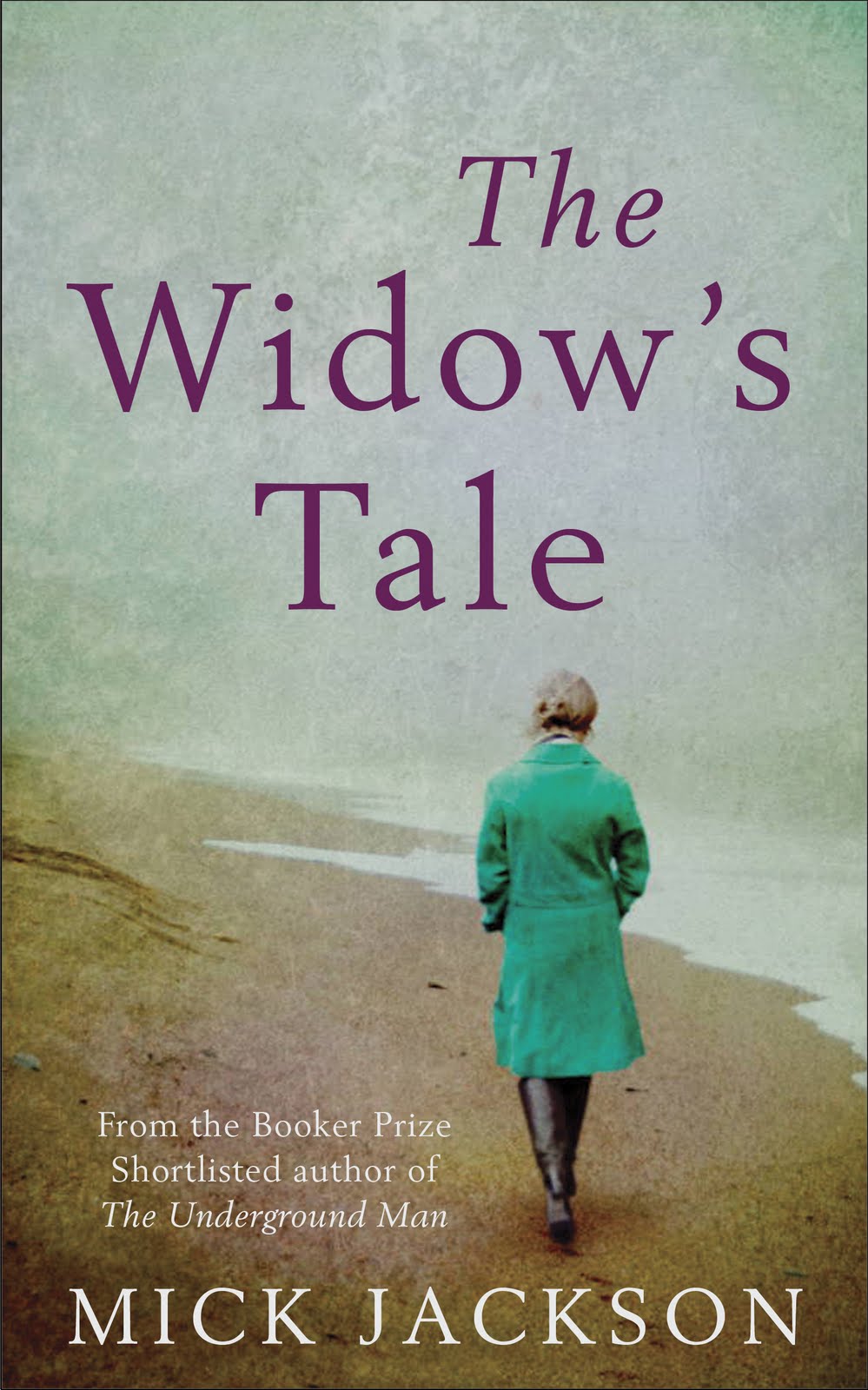
Author Interview: Mick Jackson
In the first of a series of author interviews over the next few months I've been talking to Mick Jackson about The Widow’s Tale, Norfolk, home-made speed cameras, Holbein prints, widowhood, and much else besides.

Sam Ruddock: First up, can you tell us a bit about The Widow’s Tale?
Mick Jackson: Essentially, it’s the story of a woman who abandons her house in London, gets in her car and runs away to north Norfolk, where she rents a cottage. We discover, quite early on, that she’s recently lost her husband, and the story moves forward from there.
SR: What was your inspiration for writing it?
MJ: It was something of a coincidence, in that I happened to be renting a cottage in one of the villages on the Norfolk coast when I read an article by Katherine Whitehorn about how her life changed following the loss of her husband. It made me appreciate that I knew next to nothing about a woman in that position. And the landscape – the saltmarshes in the middle of winter – just seemed the perfect setting for a character like that. So, to put it crudely, those two elements fused together right from the outset. I considered writing a screenplay about a woman who’d recently lost her husband, but ultimately decided that a piece of fiction would allow me to explore what she was going through a little more easily.
SR: What was it about the north Norfolk coast that attracted you to set this book there?
MJ: I’ve visited the area since the mid-‘80s. And my little trips often seem to have been in the autumn or winter. Those seasons somehow suit the place. The browns and greys. The hazy, misty quality that the air seems to have in the colder seasons. Perhaps it’s the moisture coming off the water. Then, of course, there’s the big skies and the saltmarshes which seemed to suit the story – for a sort of wintery reflection. But, really, it wasn’t so much a calculation. I just read the article and thought, instinctively, I should set a story about a widow here.
SR: Norfolk also appeared briefly appeared in Bears of England. Is this a recurring setting?
MJ: To be honest, I can’t remember in what way Norfolk appears in Bears of England, but it doesn’t surprise me. I’m very fond of the place. There are several areas in East Anglia that we keep coming back to … the coastline between Southwold and Aldeburgh … the Broads … and the villages along the north coast. I lived in Norwich for a year while I studied at UEA and I shot some short films in Norfolk in the mid-‘90s. I just feel comfortable there. And you don’t really go through some of these areas to get somewhere else, in the way that you do with lots of areas in Britain. So it feels a little out on a limb and perhaps that contributes to it being a little different and even perhaps a little magical.
 SR: How did you find writing from a female perspective? What research did you do to get into her mindset?
MJ: Primarily, just talking to women who happened to find themselves in that situation. One of the great things about being a writer is that if you approach people who have the experience / knowledge required for a project – whether they’re historians or bio-chemists or, in this case, widows – then they’re often only too willing to share it with you. So I talked to a few women who’d lost their husbands in recent years. And, crucially, I happened to hear a particular voice on the radio one day (an actress, who was talking about a play or film she’d worked on) and I thought that her voice was perfect, so I sort of cast her in the part, which certainly helped in the early stages. But, at the risk of sounding arrogant, you just have a hunch that you can carry off a voice or tone and there’s always a part of writing where you just do it without quite knowing what’s going on. Then you look at it five minutes later and think, either Yes, that’s working. Or, No, that’s actually quite dreadful. And some parts of the creative process I’m happy to be a complete mystery.
SR: She is a wonderfully irascible narrator with a deliciously acerbic sense of humour. It is impossible not to like her. Yet she remains nameless. Why is that?
MJ: Well, she’s telling the story, so there’s no obvious reason why she should name herself in the text. Also, I’m not always a fan of having every element in a novel explained – partly because life’s not like that and partly because I think it leaves less room for the reader to fill in some details themselves. In the same way, we never hear how her husband died – what the circumstances were – but we don’t need necessarily need to. The readers will work it out for themselves.
SR: Did her voice come to you fully formed? How did she develop through the writing process?
MJ: I reached a stage early on where I was pretty confident about her voice. As I said above, it took a little while to get there, but once I’d written the first half dozen pages and tried out her voice on a variety of subjects I thought I had a pretty good handle on where she was coming from. It sounds preposterous, but I very quickly began to consider her as a very real person, quite distinct from myself. And so whilst I was very much aware of how I was directing the narrative and organizing the topics as they came up, I was constantly filtering these things through her and the voice I’d come up with and it seemed to work quite well.
For what it’s worth, when writers talk about characters coming to life and them just sitting back and letting the characters get on with writing the story, I think they’re rather underselling their skills as writers. Either that or their novels must be completely out of control. But there are moments when you’re aware of another part of one’s mind operating, almost unconsciously, and producing text or dialogue. And for those few moments, you do just think, Ah, well that’s interesting. Let’s try that out.
SR: Widows have rarely featured in literature, and when they have it is generally as evil/senile old matriarchs dressed in black and gazing out of the window of a country estate. Why do you think this is?
MJ: Of course, the word ‘widow’ is used a little ironically in the title. She’s not simply a widow. She’s a million other things. It’s simply that widowhood is the thing that’s preoccupying her right now. We don’t really talk about widows and widowers in the same way that we used to, any more than we talk about divorcees. But my protagonist plays around with the concept … of being some old crone, dressed in black, hobbling around the village. The truth is that she’s only in her early sixties and has got a good deal of life left in her. She’s just having to reconsider what that life might be.
SR: Why does she get so obsessed with the book of Holbein prints? Is there significance in it being Holbein?
MJ: The slightly obsessive nature is one of my characteristics that I attributed to her. It somehow makes the character more three-dimensional – certainly to me (which is hugely important when I’m trying to make her live) and hopefully to the reader to. So she does several things and talks about various experiences which, with a little retouching, I’ve transposed from my own life. So when I was up in Norfolk doing some research for the book (research in this context meaning having a holiday up there) I happened to see a book of Holbein prints that I thought a friend might like, but left it and by the time I decided that I was going to buy it and went back a few hours later it had gone. I made a few notes about it at the time and thought I might be able to find a way to include it in the narrative. As it turned out it worked well with one or two other elements in the book. And one of the paintings takes on some significance. Sometimes you just have a hunch that something will work and stir it into the pot, and in this instance how it might work just occurred to me as I wrote the first draft.
 SR: You’re known for charmingly quirky, eccentric fiction. For instance, your last book, Bears of England, was an invented mythology of England and the maligned bears who have lived alongside (and sometimes underneath) it. Yet this is a very sparse narrative. What made you change track for The Widow’s Tale?
MJ: I’d say I try and find the appropriate tone for each book. My first book, The Underground Man, was set in Victorian Britain, so it’s written in something like a Victorian Gothic style. In Bears of England the actual prose is quite plain, despite the fact that the narrative itself is quite strange. With The Widow’s Tale the protagonist writes the story as a sort of journal, so there’s plenty of vernacular. And the fact that the whole thing is so conversational and immediate hopefully means that the reader gets drawn in from the word go.
SR: At one point she drives past a home-made speed camera, built of plywood and painted canary yellow. It’s a great moment that seems to capture the do-it-yourself atmosphere of the book. Does this speed camera really exist somewhere?
MJ: It used to. I’d noticed it on the coast road between Cley and Sheringham, and I included it, I think, just as a bit of a nod to the locals, to show that I knew the area. But it did strike me as rather amusing, so I had her notice it in the same way I did.
SR: Without giving away the ending, the Widow’s story would not seem to end with the conclusion of this book. Do you have a sense of where she will go from here? Would you ever consider writing a sequel?
MJ: This is probably going to sound a little defensive, but I rarely get the feeling that a book’s story ends with its conclusion. But I definitely feel that she’s come out the other side of something. It felt fitting to wrap things up when she leaves the village. So, honestly, I felt like my work here was done. As for a follow-up, I’d say the chances of that are pretty slim. In fact, I’d say they’re worse than slim.
SR: It seems to me that there are great similarities between the Widow in this book, and the old Duke in your Booker shortlisted debut, The Underground Man? Do you agree?
MJ: Yes, in that they’re both characters who are close to the edge. They find themselves in a tight corner, which is probably attractive to a writer. My books – or certainly the two you mention – aren’t exactly full of action, but I consider them to be dramatic. The drama comes from what’s going on inside the characters. And I seem to enjoy writing in the first person. Some writers don’t like it at all. Some readers too, I imagine. But I find it particularly rewarding, and I think it puts a reader right there, caught up in their particular quandaries, and helps then empathise with them.
SR: Have you always wanted to be a writer?
MJ: Pretty much yes. I’d qualify that by saying that I don’t consider it a prerogative to being a writer. A person might make that decision quite out of the blue in retirement and be as good a writer as someone who’s always wanted to write. When I was a kid I wanted to be a singer in a band, then I wrote poetry in my teens, and went to drama school where I wrote plays. And I was lucky enough to have one of those English teachers who singled me out and made me feel a little special when it came to writing creatively (and I was supremely ordinary at everything else). So in that respect, yes, I’ve always wanted to be a writer.
SR: You studied on the world renowned Creative Writing MA at the University of East Anglia in Norwich. How do you look back on that experience?
MJ: With great affection. I was desperate to get onto the course because I imagined it would give me a structure in which to write, and that I’d have much more chance of being taken seriously by publishers, etc if I’d done the course. I was right, I think, in both respects. Simply having a year in which you’re set deadlines by which point you have to complete chapters / stories, and being in the company of professional writers (in my case, Malcolm Bradbury, Rose Tremain and Michele Roberts) and all the other student writers helped create a sense of real industry and allowed you to imagine that you might actually have a crack at it.
SR: What do you think are the benefits of such courses to the writer?
MJ: The real concern people have about creative writing courses is ‘How can you teach someone how to write?’ And the answer of course is that you can’t, because everyone has their own process and their own motivations. What you can do is give people the time and space to flex their creative muscles in a supportive and constructive environment. The most important thing the course taught me was to revise – something I now do endlessly. Prior to going to Norwich I would just pound out the first draft of something, without ever quite grasping how you could go back and rework it without killing the initial spark. The fact is some people will always consider creative writing courses anathema. But carpenters aren’t born instinctively knowing how to make a cabinet and there doesn’t seem to be any great snobbery about artists going to art college. I guess the one criticism I might level against writing courses is that it does sometimes engender a sort of adjectival writing – something I’ve been guilty of in the past. And it took me a while to start thinking about the reader and what he / she might be getting out of the experience. But I think that’s just typical of writers whether they’ve done a course or not. In the first instance you’re doing it for yourself and you fail to realize that there’s somebody else involved. Somebody who might also enjoy being entertained.
 SR: You are currently working on a screenplay of The Underground Man. How is it going? When can we look forward to seeing it on our screens?
MJ: I’ve written several drafts and everyone involved seems happy with where we are. But film production is largely about organizing the money with which to make the thing (something thankfully I have nothing to do with), so we shall see. It may well never happen. Probably the less said about it right now the better.
SR: What are the major differences between writing fiction and screenplays?
MJ: The glib answer is that fiction takes longer. But since I’ve been working on one particular screenplay (on and off) for about four years now, that appears not necessarily to be the case. Of course, you’re always trying to think in terms of visuals in one medium (although it’s worth saying that a novel without some sense of the visual would be a pretty dull book). But I think the real difference is that with a novel you can take the reader right into the characters’ thoughts and elaborate on the most idiosyncratic observation, whereas with film you’re always striving for some representation, in tone, etc.
SR: Where and when do you do most of your writing?
MJ: I have an office, so I tend to do a five day week like most people. I put on my coat and hat and cycle off to work. Personally, I find the mornings the most creative, so I try and do any original composition then. But I can work until quite late in the afternoon, as long as I have regular breaks to drink tea and eat cake. And as long as I have a little catnap in my armchair after lunch.
SR: What do you write on/with?
MJ: Any ideas I have when I’m at home or out and about I just scrawl down on scraps of paper, or in a notebook. Then I collate them on the respective file on my computer at work. From those accumulated notes I begin to block out the narrative. But when I’m actually writing a draft I tend to do so by hand (with an HB pencil, since you ask) … but I’ll stop and type them up onto the computer every hour or so. Once it’s on the computer, I print off a hard copy and work on that in red pen.
SR: Are you working on another novel at the moment? What is your next project?
MJ: I’m just at the note-taking / idea-gathering stage of the next novel. Unfortunately, I’m too superstitious to share what it’s about with anyone other than my editor and agent. And, frankly, at this stage it wouldn’t make a whole lot of sense. All I have is a gut feeling. The writing of the book is my way of working that out.
SR: What books do you remember reading while growing up?
MJ: I wasn’t much of a reader as a child. I was – and still am – a very slow reader, but I now claim that it’s to do with my appreciation of the writer’s craft. So I read the usual Enid Blyton – I have very fond memories of a story in which three or four kids getting marooned on an island and digging up potatoes. And I liked the Secret Seven. Also there was some series, I think, about a circus, which had a rather exotic, Italianate name. But, no, I didn’t really get into reading until I was a teen and I jumped straight to adult fiction. I tried some of the British fiction, like Room at the Top, but found it unbelievably dull and not remotely dangerous or sexy. Then I read Catcher in the Rye, which was passed down to me by my older siblings. And it was as if a whole new world had been opened up to me. Not just the fact that it was American, but the fact that it sounded as if it had been written by someone in the 20th Century. Then I started reading other modern American fiction.
SR: Which writers do you admire?
MJ: Richard Brautigan is probably my all-time hero, for his eccentricity and his wit and the sheer individuality of his voice. I’m also a great admirer of Jonathan Raban, the British travel writer. His books are just full of heart and self-deprecation and ideas. I feel cleverer having read him. He’s also seemingly incapable of writing a dull sentence. Geoff Dyer seems to have devised a way of working that is unlike anybody else. And I’ve long been a fan of Hilary Mantel. She has this wonderful way of writing whereby something quirky or unique will trip you up in every line. There are plenty more. Richard Mabey, the nature writer. But I admire all these writers because they each have their own unique style.
SR: Are there any up and coming writers you are particularly excited about?
MJ: No. I’d actually rather appreciate it if everyone else, and in particular young people, stopped writing henceforth. There are already far too many brilliant books out there so it’d be great if all the new, brilliant writers put down their pens so that us old-timers can continue to try and carve out a modest living.
SR: If you could meet one literary character, who would it be and why?
MJ: Curiously, I don’t have any desire to meet any literary characters. Possibly because if they’re believable in the pages of a book then I feel as if I’ve already encountered them in my mind.
SR: What are your favourite books?
MJ:
The Tokyo-Montana Express by Richard Brautigan
Coasting by Jonathan Raban
Slaughterhouse Five by Kurt Vonnegut Jnr
Riddley Walker by Russell Hoban
Oscar and Lucinda by Peter Carey
Midnight’s Children by Salman Rushdie
Minor Characters by Joyce Johnson
SR: Finally, are there any questions I should have asked but didn’t? Is there anything more you would like to say but haven’t had a chance to?
MJ: All I’d say is that when talking about writing, as we have been doing, it’s always tempting to reach for the more cerebral and overlook just how big a part humour and wit plays in a reader’s appreciation of a book. And as soon as we begin to talk about humourous books we tend to imagine a very particular, superficial type of book, full of jokes. The fact is, I think, that any book worth it’s salt needs humour to make it real … to make it human. Whilst The Widow’s Tale is about loss and grieving I also think it’s one of the funniest book I’ve written. The central character is utterly unapologetic. She doesn’t give a damn what people think. Which makes her, I think, great fun to be around and rather compelling. Like being with a friend who’s had a little too much to drink at a party. Someone who’s utterly benign, but you find yourself thinking, Oh this could be fun.
SR: Mick Jackson, thank you for this fascinating insight into The Widow’s Tale and your life as a writer.
This interview was conducted by Sam on behalf of Writers’ Centre Norwich as part of the Summer Reads programme launching in June. For more information, please see www.writerscentrenorwich.org.uk

Sam Ruddock: First up, can you tell us a bit about The Widow’s Tale?
Mick Jackson: Essentially, it’s the story of a woman who abandons her house in London, gets in her car and runs away to north Norfolk, where she rents a cottage. We discover, quite early on, that she’s recently lost her husband, and the story moves forward from there.
SR: What was your inspiration for writing it?
MJ: It was something of a coincidence, in that I happened to be renting a cottage in one of the villages on the Norfolk coast when I read an article by Katherine Whitehorn about how her life changed following the loss of her husband. It made me appreciate that I knew next to nothing about a woman in that position. And the landscape – the saltmarshes in the middle of winter – just seemed the perfect setting for a character like that. So, to put it crudely, those two elements fused together right from the outset. I considered writing a screenplay about a woman who’d recently lost her husband, but ultimately decided that a piece of fiction would allow me to explore what she was going through a little more easily.
SR: What was it about the north Norfolk coast that attracted you to set this book there?
MJ: I’ve visited the area since the mid-‘80s. And my little trips often seem to have been in the autumn or winter. Those seasons somehow suit the place. The browns and greys. The hazy, misty quality that the air seems to have in the colder seasons. Perhaps it’s the moisture coming off the water. Then, of course, there’s the big skies and the saltmarshes which seemed to suit the story – for a sort of wintery reflection. But, really, it wasn’t so much a calculation. I just read the article and thought, instinctively, I should set a story about a widow here.
SR: Norfolk also appeared briefly appeared in Bears of England. Is this a recurring setting?
MJ: To be honest, I can’t remember in what way Norfolk appears in Bears of England, but it doesn’t surprise me. I’m very fond of the place. There are several areas in East Anglia that we keep coming back to … the coastline between Southwold and Aldeburgh … the Broads … and the villages along the north coast. I lived in Norwich for a year while I studied at UEA and I shot some short films in Norfolk in the mid-‘90s. I just feel comfortable there. And you don’t really go through some of these areas to get somewhere else, in the way that you do with lots of areas in Britain. So it feels a little out on a limb and perhaps that contributes to it being a little different and even perhaps a little magical.
 SR: How did you find writing from a female perspective? What research did you do to get into her mindset?
MJ: Primarily, just talking to women who happened to find themselves in that situation. One of the great things about being a writer is that if you approach people who have the experience / knowledge required for a project – whether they’re historians or bio-chemists or, in this case, widows – then they’re often only too willing to share it with you. So I talked to a few women who’d lost their husbands in recent years. And, crucially, I happened to hear a particular voice on the radio one day (an actress, who was talking about a play or film she’d worked on) and I thought that her voice was perfect, so I sort of cast her in the part, which certainly helped in the early stages. But, at the risk of sounding arrogant, you just have a hunch that you can carry off a voice or tone and there’s always a part of writing where you just do it without quite knowing what’s going on. Then you look at it five minutes later and think, either Yes, that’s working. Or, No, that’s actually quite dreadful. And some parts of the creative process I’m happy to be a complete mystery.
SR: She is a wonderfully irascible narrator with a deliciously acerbic sense of humour. It is impossible not to like her. Yet she remains nameless. Why is that?
MJ: Well, she’s telling the story, so there’s no obvious reason why she should name herself in the text. Also, I’m not always a fan of having every element in a novel explained – partly because life’s not like that and partly because I think it leaves less room for the reader to fill in some details themselves. In the same way, we never hear how her husband died – what the circumstances were – but we don’t need necessarily need to. The readers will work it out for themselves.
SR: Did her voice come to you fully formed? How did she develop through the writing process?
MJ: I reached a stage early on where I was pretty confident about her voice. As I said above, it took a little while to get there, but once I’d written the first half dozen pages and tried out her voice on a variety of subjects I thought I had a pretty good handle on where she was coming from. It sounds preposterous, but I very quickly began to consider her as a very real person, quite distinct from myself. And so whilst I was very much aware of how I was directing the narrative and organizing the topics as they came up, I was constantly filtering these things through her and the voice I’d come up with and it seemed to work quite well.
For what it’s worth, when writers talk about characters coming to life and them just sitting back and letting the characters get on with writing the story, I think they’re rather underselling their skills as writers. Either that or their novels must be completely out of control. But there are moments when you’re aware of another part of one’s mind operating, almost unconsciously, and producing text or dialogue. And for those few moments, you do just think, Ah, well that’s interesting. Let’s try that out.
SR: Widows have rarely featured in literature, and when they have it is generally as evil/senile old matriarchs dressed in black and gazing out of the window of a country estate. Why do you think this is?
MJ: Of course, the word ‘widow’ is used a little ironically in the title. She’s not simply a widow. She’s a million other things. It’s simply that widowhood is the thing that’s preoccupying her right now. We don’t really talk about widows and widowers in the same way that we used to, any more than we talk about divorcees. But my protagonist plays around with the concept … of being some old crone, dressed in black, hobbling around the village. The truth is that she’s only in her early sixties and has got a good deal of life left in her. She’s just having to reconsider what that life might be.
SR: Why does she get so obsessed with the book of Holbein prints? Is there significance in it being Holbein?
MJ: The slightly obsessive nature is one of my characteristics that I attributed to her. It somehow makes the character more three-dimensional – certainly to me (which is hugely important when I’m trying to make her live) and hopefully to the reader to. So she does several things and talks about various experiences which, with a little retouching, I’ve transposed from my own life. So when I was up in Norfolk doing some research for the book (research in this context meaning having a holiday up there) I happened to see a book of Holbein prints that I thought a friend might like, but left it and by the time I decided that I was going to buy it and went back a few hours later it had gone. I made a few notes about it at the time and thought I might be able to find a way to include it in the narrative. As it turned out it worked well with one or two other elements in the book. And one of the paintings takes on some significance. Sometimes you just have a hunch that something will work and stir it into the pot, and in this instance how it might work just occurred to me as I wrote the first draft.

MJ: I’d say I try and find the appropriate tone for each book. My first book, The Underground Man, was set in Victorian Britain, so it’s written in something like a Victorian Gothic style. In Bears of England the actual prose is quite plain, despite the fact that the narrative itself is quite strange. With The Widow’s Tale the protagonist writes the story as a sort of journal, so there’s plenty of vernacular. And the fact that the whole thing is so conversational and immediate hopefully means that the reader gets drawn in from the word go.
SR: At one point she drives past a home-made speed camera, built of plywood and painted canary yellow. It’s a great moment that seems to capture the do-it-yourself atmosphere of the book. Does this speed camera really exist somewhere?
MJ: It used to. I’d noticed it on the coast road between Cley and Sheringham, and I included it, I think, just as a bit of a nod to the locals, to show that I knew the area. But it did strike me as rather amusing, so I had her notice it in the same way I did.
SR: Without giving away the ending, the Widow’s story would not seem to end with the conclusion of this book. Do you have a sense of where she will go from here? Would you ever consider writing a sequel?
MJ: This is probably going to sound a little defensive, but I rarely get the feeling that a book’s story ends with its conclusion. But I definitely feel that she’s come out the other side of something. It felt fitting to wrap things up when she leaves the village. So, honestly, I felt like my work here was done. As for a follow-up, I’d say the chances of that are pretty slim. In fact, I’d say they’re worse than slim.
SR: It seems to me that there are great similarities between the Widow in this book, and the old Duke in your Booker shortlisted debut, The Underground Man? Do you agree?
MJ: Yes, in that they’re both characters who are close to the edge. They find themselves in a tight corner, which is probably attractive to a writer. My books – or certainly the two you mention – aren’t exactly full of action, but I consider them to be dramatic. The drama comes from what’s going on inside the characters. And I seem to enjoy writing in the first person. Some writers don’t like it at all. Some readers too, I imagine. But I find it particularly rewarding, and I think it puts a reader right there, caught up in their particular quandaries, and helps then empathise with them.
SR: Have you always wanted to be a writer?
MJ: Pretty much yes. I’d qualify that by saying that I don’t consider it a prerogative to being a writer. A person might make that decision quite out of the blue in retirement and be as good a writer as someone who’s always wanted to write. When I was a kid I wanted to be a singer in a band, then I wrote poetry in my teens, and went to drama school where I wrote plays. And I was lucky enough to have one of those English teachers who singled me out and made me feel a little special when it came to writing creatively (and I was supremely ordinary at everything else). So in that respect, yes, I’ve always wanted to be a writer.
SR: You studied on the world renowned Creative Writing MA at the University of East Anglia in Norwich. How do you look back on that experience?
MJ: With great affection. I was desperate to get onto the course because I imagined it would give me a structure in which to write, and that I’d have much more chance of being taken seriously by publishers, etc if I’d done the course. I was right, I think, in both respects. Simply having a year in which you’re set deadlines by which point you have to complete chapters / stories, and being in the company of professional writers (in my case, Malcolm Bradbury, Rose Tremain and Michele Roberts) and all the other student writers helped create a sense of real industry and allowed you to imagine that you might actually have a crack at it.
SR: What do you think are the benefits of such courses to the writer?
MJ: The real concern people have about creative writing courses is ‘How can you teach someone how to write?’ And the answer of course is that you can’t, because everyone has their own process and their own motivations. What you can do is give people the time and space to flex their creative muscles in a supportive and constructive environment. The most important thing the course taught me was to revise – something I now do endlessly. Prior to going to Norwich I would just pound out the first draft of something, without ever quite grasping how you could go back and rework it without killing the initial spark. The fact is some people will always consider creative writing courses anathema. But carpenters aren’t born instinctively knowing how to make a cabinet and there doesn’t seem to be any great snobbery about artists going to art college. I guess the one criticism I might level against writing courses is that it does sometimes engender a sort of adjectival writing – something I’ve been guilty of in the past. And it took me a while to start thinking about the reader and what he / she might be getting out of the experience. But I think that’s just typical of writers whether they’ve done a course or not. In the first instance you’re doing it for yourself and you fail to realize that there’s somebody else involved. Somebody who might also enjoy being entertained.

MJ: I’ve written several drafts and everyone involved seems happy with where we are. But film production is largely about organizing the money with which to make the thing (something thankfully I have nothing to do with), so we shall see. It may well never happen. Probably the less said about it right now the better.
SR: What are the major differences between writing fiction and screenplays?
MJ: The glib answer is that fiction takes longer. But since I’ve been working on one particular screenplay (on and off) for about four years now, that appears not necessarily to be the case. Of course, you’re always trying to think in terms of visuals in one medium (although it’s worth saying that a novel without some sense of the visual would be a pretty dull book). But I think the real difference is that with a novel you can take the reader right into the characters’ thoughts and elaborate on the most idiosyncratic observation, whereas with film you’re always striving for some representation, in tone, etc.
SR: Where and when do you do most of your writing?
MJ: I have an office, so I tend to do a five day week like most people. I put on my coat and hat and cycle off to work. Personally, I find the mornings the most creative, so I try and do any original composition then. But I can work until quite late in the afternoon, as long as I have regular breaks to drink tea and eat cake. And as long as I have a little catnap in my armchair after lunch.
SR: What do you write on/with?
MJ: Any ideas I have when I’m at home or out and about I just scrawl down on scraps of paper, or in a notebook. Then I collate them on the respective file on my computer at work. From those accumulated notes I begin to block out the narrative. But when I’m actually writing a draft I tend to do so by hand (with an HB pencil, since you ask) … but I’ll stop and type them up onto the computer every hour or so. Once it’s on the computer, I print off a hard copy and work on that in red pen.
SR: Are you working on another novel at the moment? What is your next project?
MJ: I’m just at the note-taking / idea-gathering stage of the next novel. Unfortunately, I’m too superstitious to share what it’s about with anyone other than my editor and agent. And, frankly, at this stage it wouldn’t make a whole lot of sense. All I have is a gut feeling. The writing of the book is my way of working that out.
SR: What books do you remember reading while growing up?
MJ: I wasn’t much of a reader as a child. I was – and still am – a very slow reader, but I now claim that it’s to do with my appreciation of the writer’s craft. So I read the usual Enid Blyton – I have very fond memories of a story in which three or four kids getting marooned on an island and digging up potatoes. And I liked the Secret Seven. Also there was some series, I think, about a circus, which had a rather exotic, Italianate name. But, no, I didn’t really get into reading until I was a teen and I jumped straight to adult fiction. I tried some of the British fiction, like Room at the Top, but found it unbelievably dull and not remotely dangerous or sexy. Then I read Catcher in the Rye, which was passed down to me by my older siblings. And it was as if a whole new world had been opened up to me. Not just the fact that it was American, but the fact that it sounded as if it had been written by someone in the 20th Century. Then I started reading other modern American fiction.
SR: Which writers do you admire?
MJ: Richard Brautigan is probably my all-time hero, for his eccentricity and his wit and the sheer individuality of his voice. I’m also a great admirer of Jonathan Raban, the British travel writer. His books are just full of heart and self-deprecation and ideas. I feel cleverer having read him. He’s also seemingly incapable of writing a dull sentence. Geoff Dyer seems to have devised a way of working that is unlike anybody else. And I’ve long been a fan of Hilary Mantel. She has this wonderful way of writing whereby something quirky or unique will trip you up in every line. There are plenty more. Richard Mabey, the nature writer. But I admire all these writers because they each have their own unique style.
SR: Are there any up and coming writers you are particularly excited about?
MJ: No. I’d actually rather appreciate it if everyone else, and in particular young people, stopped writing henceforth. There are already far too many brilliant books out there so it’d be great if all the new, brilliant writers put down their pens so that us old-timers can continue to try and carve out a modest living.
SR: If you could meet one literary character, who would it be and why?
MJ: Curiously, I don’t have any desire to meet any literary characters. Possibly because if they’re believable in the pages of a book then I feel as if I’ve already encountered them in my mind.
SR: What are your favourite books?
MJ:
The Tokyo-Montana Express by Richard Brautigan
Coasting by Jonathan Raban
Slaughterhouse Five by Kurt Vonnegut Jnr
Riddley Walker by Russell Hoban
Oscar and Lucinda by Peter Carey
Midnight’s Children by Salman Rushdie
Minor Characters by Joyce Johnson
SR: Finally, are there any questions I should have asked but didn’t? Is there anything more you would like to say but haven’t had a chance to?
MJ: All I’d say is that when talking about writing, as we have been doing, it’s always tempting to reach for the more cerebral and overlook just how big a part humour and wit plays in a reader’s appreciation of a book. And as soon as we begin to talk about humourous books we tend to imagine a very particular, superficial type of book, full of jokes. The fact is, I think, that any book worth it’s salt needs humour to make it real … to make it human. Whilst The Widow’s Tale is about loss and grieving I also think it’s one of the funniest book I’ve written. The central character is utterly unapologetic. She doesn’t give a damn what people think. Which makes her, I think, great fun to be around and rather compelling. Like being with a friend who’s had a little too much to drink at a party. Someone who’s utterly benign, but you find yourself thinking, Oh this could be fun.
SR: Mick Jackson, thank you for this fascinating insight into The Widow’s Tale and your life as a writer.
This interview was conducted by Sam on behalf of Writers’ Centre Norwich as part of the Summer Reads programme launching in June. For more information, please see www.writerscentrenorwich.org.uk
Subscribe to:
Posts (Atom)